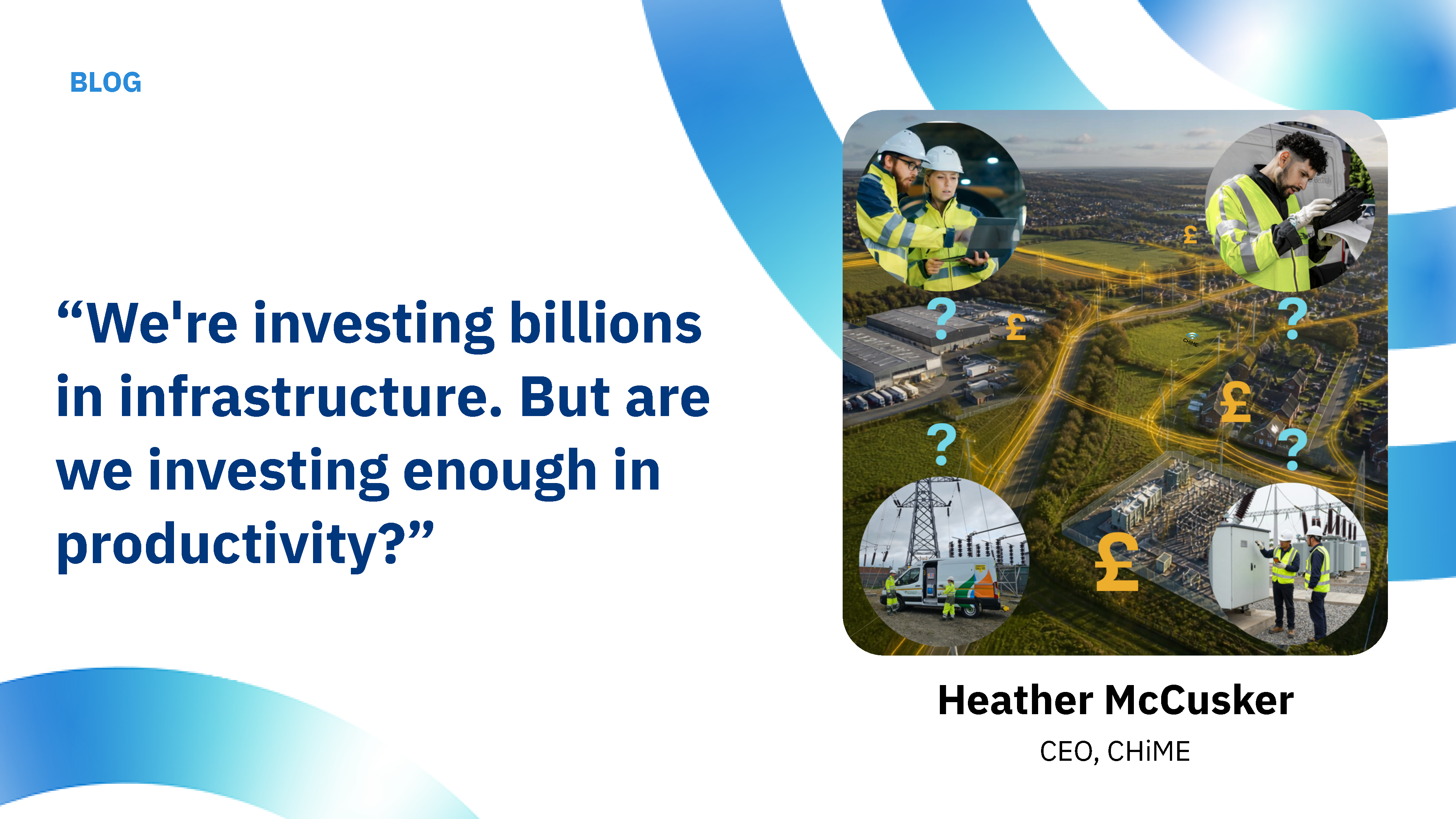
Over the past year, we've seen major announcements on energy infrastructure investment, grid resilience and network modernisation. These programmes are essential if we're going to build the networks needed for the future. But when I read these announcements, I often find myself thinking less about the infrastructure and more about the people who are expected to deliver it.
At CHiME, we've spent years working alongside field teams, operational managers and control rooms. One thing I've learned is that the biggest barriers to performance are rarely technical. More often, they're the small operational frustrations that slow people down every day.
The Productivity Challenge Nobody Is Talking About
When people hear the word productivity, they often think about getting more work out of people. The reality is that productivity isn't about asking people to do more. It's about removing the obstacles that prevent them from doing their best work.
I've become convinced that some of the biggest productivity gains come from addressing the everyday frustrations that slow people down, including searching for information, switching between systems, repeating tasks, or trying to coordinate work with incomplete visibility. When you remove that friction, people can focus on what they're there to do in the first place, which is getting the job done safely, efficiently and right first time.
What strikes me is that organisations have invested heavily in technology, yet the day-to-day experience of getting work done can still be surprisingly difficult.
The result isn't usually one major problem. It's dozens of small interruptions, delays and inefficiencies that accumulate across thousands of jobs every day. Individually, they may seem insignificant. Collectively, they have a profound impact on productivity, operational performance and ultimately the service delivered to customers.
More Systems Don't Always Mean Better Outcomes
One of the misconceptions in our industry is that more technology automatically leads to better performance. Most operators I speak to don't have a shortage of systems. If anything, they have the opposite problem.
The challenge is that information often sits in different places, processes become harder to change, and field workers can end up spending valuable time navigating technology rather than completing work. I've always believed that technology should adapt to operations, not force operations to adapt to technology.
The organisations seeing the greatest success are often the ones focused on simplifying the experience for their workforce. They understand that every minute saved from administration is another minute spent delivering value in the field.
The Next Phase of Transformation Must Focus on People
The utility sector faces significant challenges over the next decade. Networks are expanding, infrastructure investment is accelerating, and expectations from customers, regulators and stakeholders continue to rise. At the same time, operators are under constant pressure to improve performance, manage costs and deliver more with the resources they have.
In that environment, I believe the conversation needs to shift. We've spent years focusing on infrastructure, systems and technology. All of these are important, but none of them create value on their own. Value is created when the right information reaches the right people at the right time, enabling them to make decisions, respond to change and complete work safely and efficiently.
The organisations that will succeed in the years ahead won't necessarily be those with the largest investment programmes or the most technology. They'll be the ones that make it easiest for their people to get the job done. They'll remove friction, connect the field and the control room more effectively, and give their teams the confidence to act on real-time information.
Because ultimately, every regulatory target, customer commitment and infrastructure programme depends on people. And as we continue to invest in the future of our networks, we should be investing just as much thought into the experience of the workforce responsible for delivering them. In my view, the next decade won't be defined by the assets we build. It will be defined by how effectively we enable the people who operate them.